Walking through the shops exiting the Cancun airport, you may notice that most snack products have prominent black warning signs printed on the package or stickered on. What are these symbols? What do they mean?
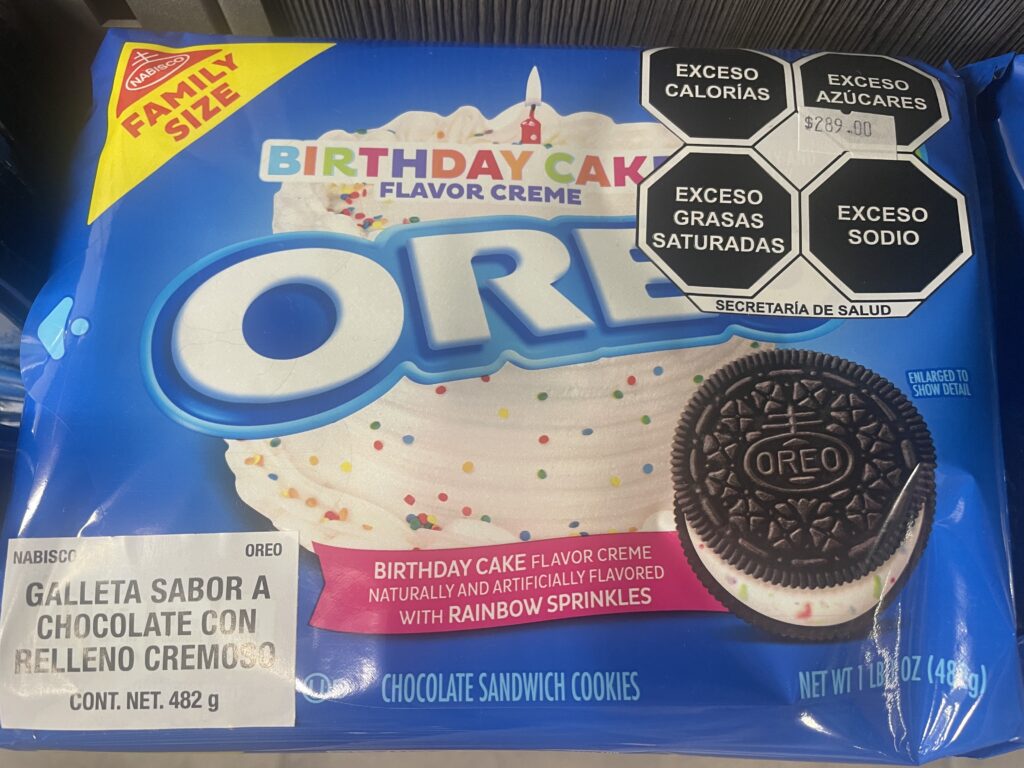
What are the Stop Sign Symbols on the front of Mexico’s Snack Packages?
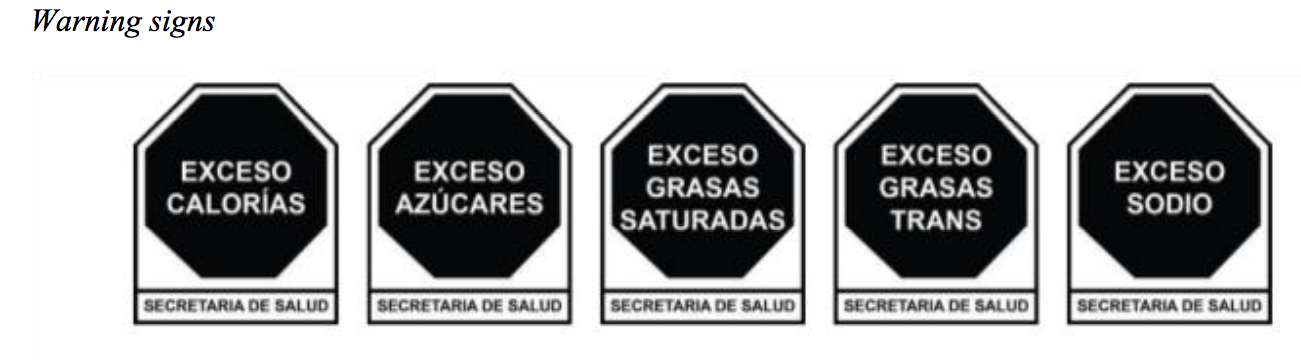
The black stop sign symbols affixed on the front of packaged food in Mexico are part of Mexico’s Front-of-Pack Labeling scheme intended to reduce obesity and curb the rise of chronic disease. The octagons on pack warn consumers that the food within contains excessive amounts of nutrients associated with negative health outcomes, like added sugar or sodium.

These symbols have been mandated by Mexico’s NOM-051 regulation (NOM = “Norma Oficial Mexicana” in Spanish, which translates to Official Mexican Standard in English). The regulation was rolled out in 2020 and is intended to have 3 phases, each with more stringent requirements, with the final phase releasing in October 2025.
Phase 1: Oct 2020- Sept 2023
Phase 2: Oct 2023-Sept 2025
Phase 3: Oct 2025 –
Overview
- In scope products: Domestic and international prepackaged, processed foods and non-alcoholic beverages sold in Mexico (page 2)
- Exempt: Bulk food items, items packaged at point of sale, like a bakery, or deli counter
- Enforcement: Mexico’s Health and Sanitary Risks Authority (COFEPRIS)
History/Timeline
- March 2020 – Nom-051 published
- October 1, 2020 – Warning sign labels enforced in market
- June 6, 2021 – Labeling manuel rolled out and translated to English and other langauges to help foreign markets interested in selling products in Mexico; some amendments
- October 1 2023 – Start Phase 2
- October 2025 – Start Phase 3
General Requirements
- Warning signs are mandatory.
- All warning labels that the product qualifies for must be printed. For example, if the product meets threshold for calories and sugar, BOTH must be displayed.
- Octagons must be placed in the upper right hand corner of the food packaging, which exceptions for small packages.
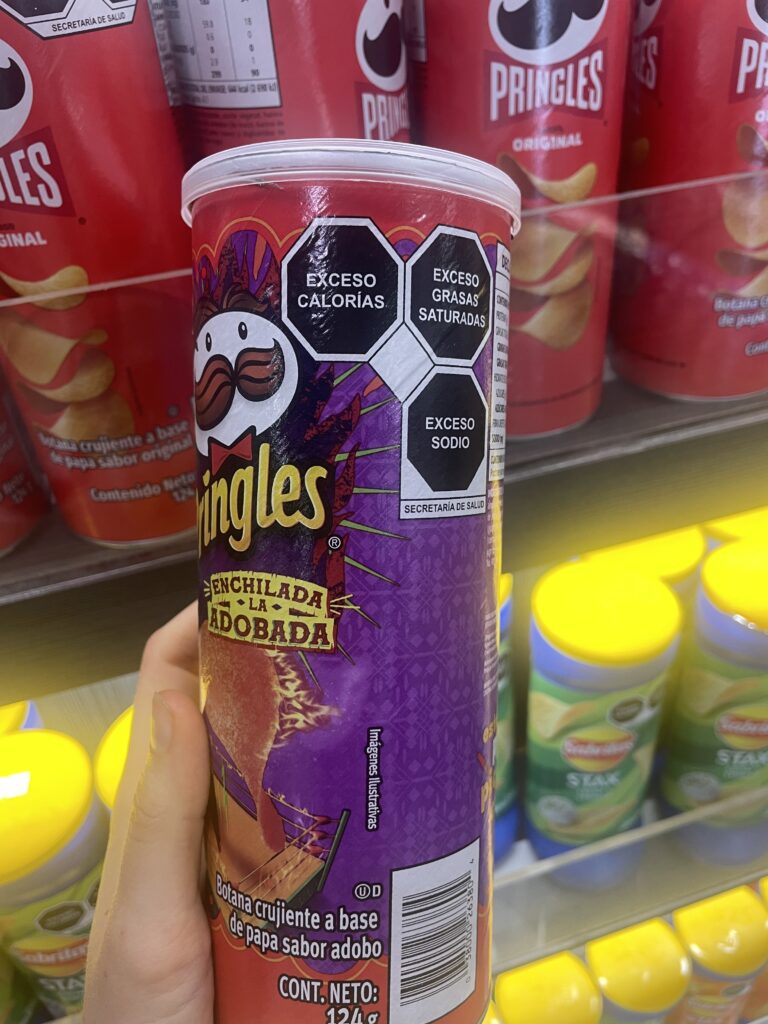
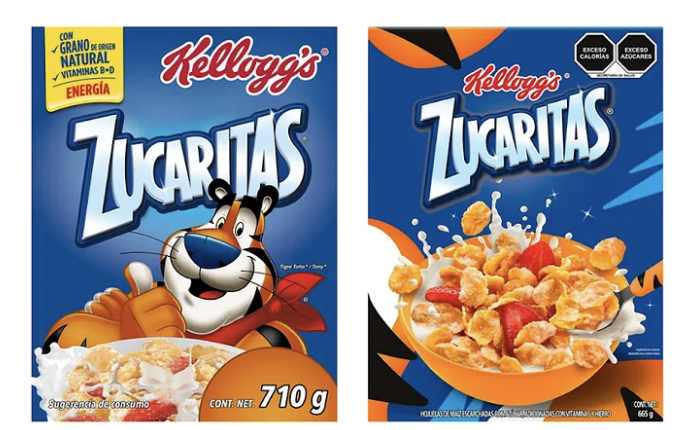
- Products that qualify for any warning symbol may not include any type of cartoon mascot, character, celebrity, or interactive element on pack or in digital versions. This is to dissuade children’s interest in less nutrient-dense food. (See image below)
Criteria
At time of writing (May 2025), Phase 2 is in effect. Nutrition criteria is determined in standard 100 g or 100 mL amounts of food. Note though, that a serving of most products may be lower or higher than that amount. Criteria screenshots are sourced from a USDA voluntary report. See link at bottom of article.


Additional Stipulations
Cautionary legends are also required on prepackaged Mexican food products that contain artificial sweeteners or caffeine. Placement is also the upper right side of the main package display service. If there are warning signs, the legends are printed below.
- Contains sweetener, not recommended for children
- Contains caffeine – avoid in children

These translate to:
- “CONTIENE EDULCORANTES – NO RECOMENDABLE EN NIÑOS” (CONTAINS SWEETENERS – NOT RECOMMENDED FOR CHILDREN”)
- “CONTIENE CAFEINA – EVITAR EN NIÑOS” (CONTAINS CAFFEINE – AVOID FOR CHILDREN)
Examples
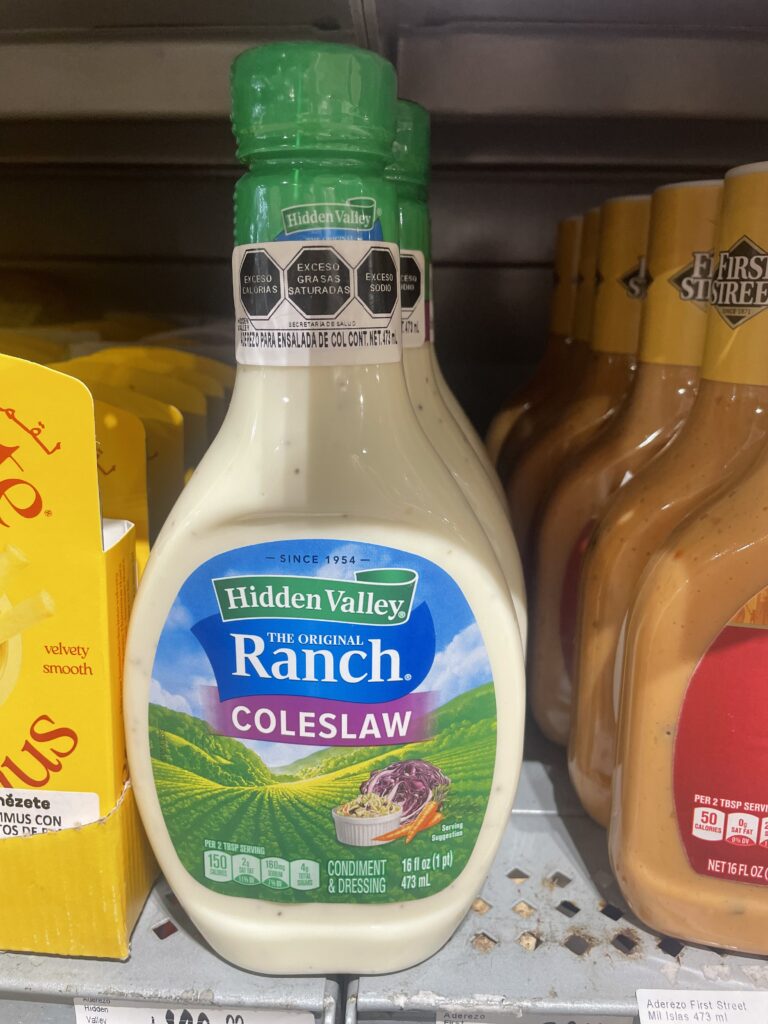

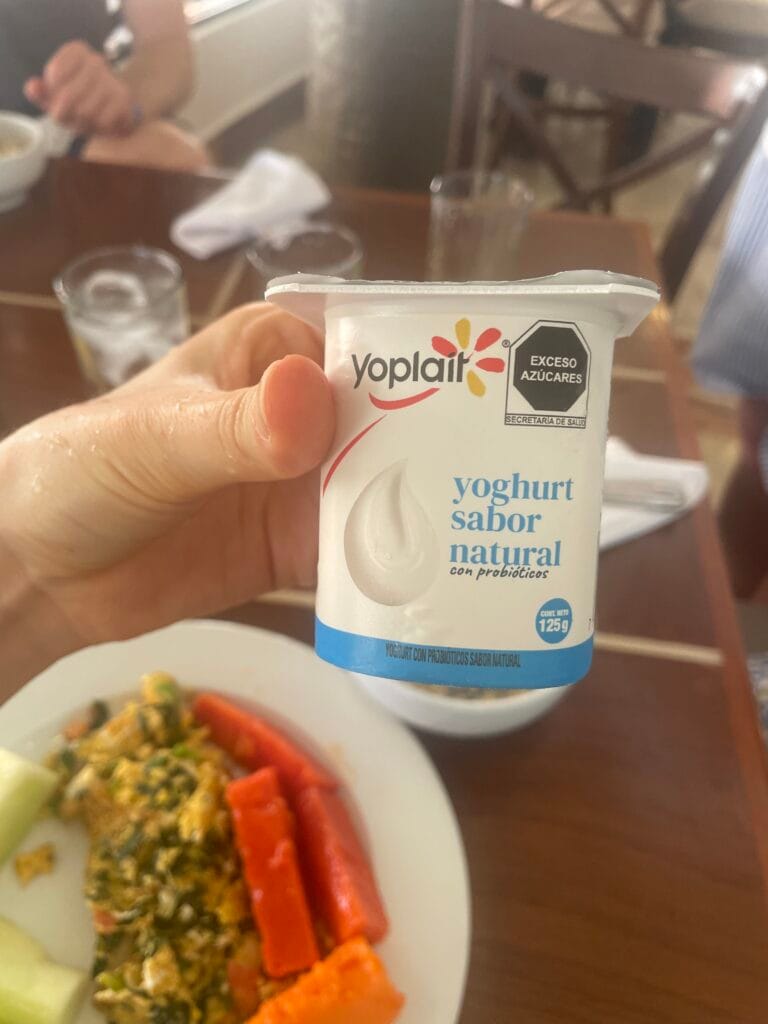
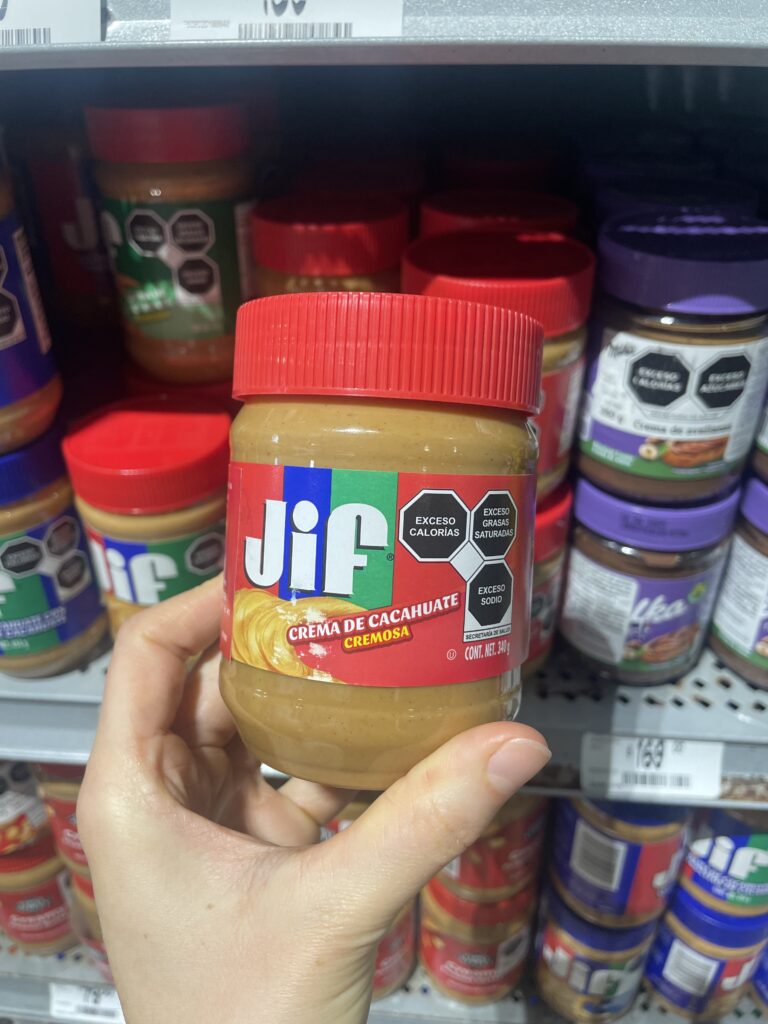
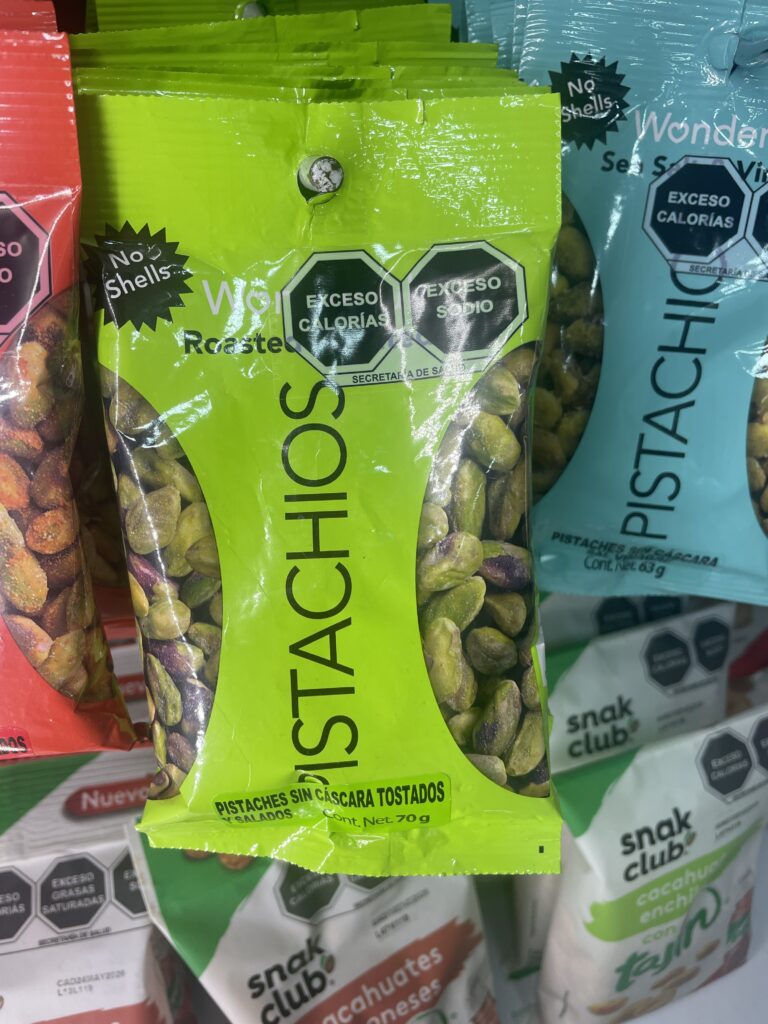

As you can see, there are no exemptions for products based on source. For example, nuts, such as the pistachios above, still have to bear the excessive calorie and excessive sodium warnings despite being from a whole, laregly unprocessed foods. This differs from the policies of the United States for the Definition of Healthy, and Nutri-Score (link to article) in Europe.
Efficacy
Many are optimistic that the warning labels will make a difference. Even if consumers’ shopping habits remain the same, such a visible warning encourages manufacturers to reformulate and innovate according to the published nutrition standards. Additionally, a modeling study published in Plos Medicine predicts that obesity and obesity related costs will drop.
Anecdotally, a grocery worker interviewed in a Think Global Health article(3) did note an increased demand for diet versus regular soda in her store since the regulation went out, suggesting that added sugar intake may be decreasing in some populations. On the other hand, the same grocery worker shared that in her personal point of view for her store, chip and cookie sales appear the same.
A regional doctor interviewed in the same article hypothesized that only a mere 10% of his patients paid heed to the warning labels, suggesting that the vast majority were indifferent or apathetic.
At this point in time, the bottom line is that we don’t know if it’s working. Little, if any, reliable research on efficacy is published (at least in English). Even the Plos study, referenced above, was a hypothetical projection, and results from Canadians and front of pack labeling impacts were leveraged. While interesting, the Canadian and Mexican populations likely have different socioeconomic and environmental influences, and may have different outcomes.
The verdict is still out on positive change.
Conclusion
One way Mexico is working to combat obesity and chronic disease is through warning labels on packaged food. These labels are black stop signs that warn consumers of excessive calories, excessive sugar, excessive saturated fats, excessive trans fats, and excessive sodium. However, some nutrient dense foods, like nuts, still bear these warnings. The Nom-051 policy seems to have children in mind, as animated, cutesy mascots cannot be used on foods with warning labels, and foods with sweeteners and caffeine also have warnings to avoid in children.
What are your thoughts? Do you agree with Mexico’s policy and strategy?
Resources:
- https://apps.fas.usda.gov/newgainapi/api/Report/DownloadReportByFileName?fileName=Front%20of%20Pack%20Labeling%20Manual%20Published_Mexico%20CIty%20ATO_Mexico_06-04-2021.pdf
- https://pmc.ncbi.nlm.nih.gov/articles/PMC7386611/ (modeling study)
- https://www.thinkglobalhealth.org/article/look-food-warning-labels-mexico